April 26, 2010

三俣山 

先週末、Lauriの会社の新入社員の方々と一緒に、九重連山のひとつ、三俣山へ行ってきました!
今までは、九重へ行く時にはカーナビで設定して簡単に行けたのですが、
カーナビの調子が悪く、目的地を設定することができなくなってしまった為、 地図と道路案内板をにらめっこしながらのドライブとなりました…。

運転者がLauriで、私は助手席ナビ係。
案内板に、「九酔渓、九重夢大橋」などと、やまなみハイウエイ付近のおなじみの名前を発見したので、「ここで曲がって!」と指示を出してしまったのですが、 走っても全然馴染みのない道…。
そして景色がいい☆☆

途中の案内図でチェックすると、全然違う道でした…。
どうやら早く左折しすぎてしまった様…。

そのまま道なりに行って、なんとガンジーファームや、くじゅう花公園などを通り、 やまなみハイウエイを南から北上して来るという、とんでもない遠回りコースになってしまいました…。
普通なら、1時間半もかからないぐらいの道が、なんと2時間半…。
運転者であるLauriはもちろん、同乗していた会社の方々、本当に申し訳ありませんでした!!!!!

登山口である「長者原」に着くと、すぐさまトイレに走る私…。
その間に、Lauri達は荷物を持って、車から離れて私を待っておりました。
登山の本など、まだ車に置いたままだったのですが、
「有名な山だし、案内板も多いだろう☆なんとかなるさっ♪」と気楽にかまえ、本も地図も取りに帰らず出発!!

ちゃんと登山者名簿に記入し、案内板を見て、左に行く雨ヶ池コースの方に行ってみました。 九州自然歩道という道らしくて、なんだかハイキングのような、とっても楽に歩けるコースです。
三俣山に登る入り口はどこだろう…と、しっかり周りを見ながら歩いていたのですが、 それらしいものは一向にありません。
山は近くにたくさん見えるのですが、こんなに近すぎると、もはやどれがどの山なのかさっぱりです!
角度が違うと、見え方も全然違うし…。
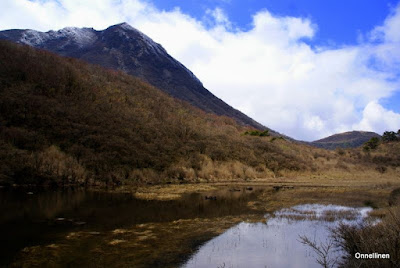
それにしても、あの山の頂上付近に見えるものは何??まさか雪じゃないよねえ??

「坊ガツル」という、とっても景色がきれいな盆地に出て、 お腹ペコペコで、力もでない状態だったので、山の頂上ではないけれどお昼にしました♪
山に囲まれ、川も流れ、景色は最高!!


そこで、ちょうどお昼休憩をしていた人に、三俣山への行き方を尋ねると、
どうやら随分大回りをしてきてしまったようで、普通だったら長者原からもっと早く行けたことが判明!
「三俣山の周辺をぐるっと回るコースもあるから、それで長者原に戻ったら」というアドバイスをいただいたので、ぐるっと回ることにしました。

周辺をぐるっと回るなんて、簡単だろうと軽く考えたのですが、このすがもり越えというコースは、どんどん山を登っていきます。
ゴツゴツの岩を登り、両手を使い、これぞ登山!!という感じの道。


かなり登ってきて、近くに硫黄山が!!
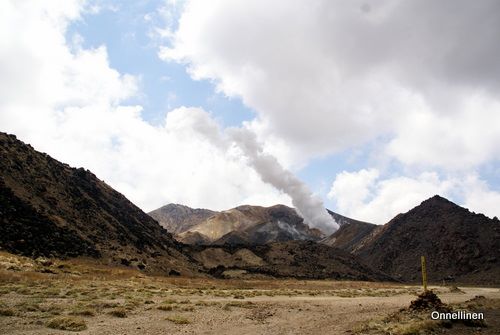

「すがもり越」という所に、三俣山山頂に続く道がありました。


メンバー全員「せっかくここまで来たんだから、山頂まで行ってみたい!!」という気持ちになり、行ってみることにしました!!

でもすぐ近くにありそうだった山頂、なかなか着きません…。
人に聞きながら、頂上を目指しました。

この三俣山、本峰、北峰、南峰、西峰の4つの主要峰からなる山で、
私達は、南峰に行きました☆☆
なんとそこには、樹氷が!!!


もう4月も終わりだというのにびっくりです!


下山は、この「南峰から雨ヶ池に出る道が最短」というのを聞いて、
時間もあまりなかったので、迷わずこの道を選びました。
地図にもあまり書かれていない道らしいですが…。

歩いて納得!
狭い!急!足元が悪くて滑る!とそんな感じの道です。

根っこにしっかりとつかまって、段差を降りたり、アドベンチャーをしている気分でした!!

横に見える景色は素晴らしい!!!


ようやく雨ヶ池に着き、やれやれ…と思ったのですが、実はここからも1時間ぐらいありました。

長者原に着いた頃には、天気もすっかり晴れ渡り、三俣山がこんなによく見えました☆☆

改めて、デカイ山にびっくり!!!
よく頂上まで登ったものだと、感心してしまいました♪

帰りは、九重星生ホテルの温泉に入って疲れを癒してきました☆☆
大展望露天風呂からは、登ってきた三俣山が一望できました!!
は~、最高!!!

三俣山までの行きの道を遠回りしてしまったり、三俣山山頂までの道も遠回りしてしまったり、遠回りばかりの1日だったけど、そんな遠回りをしたからこそ見えたもの、できた経験、達成感などなど、振り返って考えると、「遠回りしちゃってよかった☆」と思えた、そんな休日でした♪

April 25, 2010

Impressions of working in Japan: Don't be like this if you are an employee in Japan...

Below is a list of features that Japanese would not like to see in their employees. Some of them are shared universally, some are apparent only in Japan. You can easily spot items that may become a barrier for foreign employees in Japan (e.g. a person like me). Don't be a kind of person who:

1. Can not perform a neat greeting
2. Does not take notes and therefore asks same thing several times
3. Can not use the honorific form of Japanese language
4. Is not eager to do the miscellaneous (small) tasks
5. Is not able to "report, contact, consult"
6. Repeats the same mistake
7. Can not reply promptly
8. Does not apologize for own mistakes
9. Instead of taking initiative waits for an order
10. Acts proud and intelligent but is not
11. Goes home without asking a senior, "Shall I help you?" and therefore has no spirit of cooperation.
12. Talks too much during working hours
13. Gets offended from a someone's warning
14. Can not prioritize and panics

(Conducted from a sample of 1030 female and male public sector workers aged 30 - 59)


Talking on my behalf: The most challenging point is no doubt number 3. Managing conversational Japanese is a challenge enough. Saying something like:ごめんどうですが、もういちどおこしいただけますでしょうか。" instead of a simple "またきてくれますか。" does not come out spontaneously. Both share the same meaning, which is in English: "Please come again".

The rest of the numbers are manageable but maybe not with the same attitude that Japanese have. For example, number 11: when your work time is over, how many times have you asked from a senior, "Is there something I could still help with?". I could force my self to this but in reality I'd probably not be honestly eager to help if it would mean unpaid overtime work and loss of free time. And anyway why it has to be a senior worker? Are they the only ones who deserve or are privileged to be helped?

Number 12. "Talks too much during working hours" is possible but needs quite a push. Can it really be so disruptive to talk at the work place? Of course it's never good to blabber around about every single thing - I'd hate that too. But a friendly and a cheerful conversation that is not only connected to work is nice to have. Yet, in Japan, the step from not talking at all to talking too much is seemingly short. I can't but wonder why we have to play official and serious during work.

〈日本語訳〉

このリストを見た後、日本で働く未来は暗くなった…。新入社員さんはここに気をつけて!

1.あいさつがきちんとできない
2.メモを取らず、同じことを何度も聞く
3.敬語が使えない
4.雑用を率先してやろうとしない
5.ホウレンソウ(報告、連絡、相談)ができない
6.同じ間違いを繰り返す
7.返事ができない
8.自分のミスを謝らない
9.「指示待ち」で自分から積極的に動こうとしない
10.プライドが高く、知ったかぶりする
11.多用な先輩に「手伝いましょうか」の言葉もなく帰るなど、協調性がない
12.仕事中の私語が多すぎる
13.注意すると「逆ギレ」する
14.仕事の優先順位が付けられずパニックになる

挑戦的なのは3番です。普通の日本語は難しいので、敬語はちっと…。例えば、「またきてくれますか。」と言うのは「ごめんどうですが、もういちどおこしいただけますでしょうか。」ゴーン!

他の番号は出来ても、日本人と同じような心掛けで行うことは、かなり難しい。例えば、11番:仕事が終わった時、よく「手伝いましょうか?」と聞いていますか?私も、しようと思えば出来ますが、本音は残業手当てもなく、自由な時間を無駄に使いたくありません。そして、なぜ"先輩"なのでしょう?後輩は手伝わなくてもいいですか?

「12.仕事中の私語が多すぎる」は簡単に気をつけることが出来る。でも仕事中に話すことは、そんなにいけないですか?もちろん、四六時中話してばかりなのは悪いし、私も嫌いです。でも、フレンドリーで快活な、仕事に関係ない会話もした方がいいと思う。日本では「全然話さない」のと「私語が多すぎる」という違いはかなり少ない。なぜ仕事中に、真面目で公的な様子を演じなくてはいけないのかと思っています。

April 17, 2010

Gender equality in Japan

Why it took so long time to realize this: Gender equality, the number one human right, has improved in Japan significantly during the past ten or so years. In fact, the situation is so good that at any time Japan could claim a top-three position in the Gender equality list. In 2009 the top-three was by The World Economic Forum as follows:
1. Iceland
2. Finland
3. Norway
Am I talking total nonsense? No, Japan is not even a listed country but that's not the point.

See, the enlightening fact is: in those above top-three countries women are leveling their position against men. In other words, women are the changing variable while men stay in a fixed state.

On the contrary, in Japan, women's status is fixed while men tend to hold a changing variable. In practice that translates: men are undergoing a gradual change and becoming like women. And behold, only by a switch of perspective the gender equality gap has become narrower! Yahoo!

This realization came after reading a post by Quinni. She tells in the aftermath of living in Japan:
"Apparently, in Japan “masculine men” can be an oxymoron. They are skinny, they are shy, they are delicate, they are obsessed with fashion and hairstyles, they pluck their eyebrows, and I could swear, some of them wear make up!"
Cheers Quinni!

April 12, 2010

Impressions of working in Japan: a 30 minute presentation of Finnish education system


Ha, I did it! I pulled off a presentation in front of a dozen employees without being nervous - and most of all in Japanese! Ah, feels utterly good!! A big thanks goes to the attentive audience and Yumiko, the greatest supporter of all!

April 11, 2010

Impressions of working in Japan: Credo (クレド)

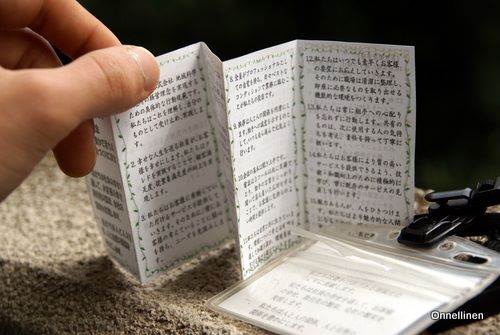
Here's a plastic pocket that we carry around during the office hours. It holds in two items: employee's name tag and a credo.

Ok, name tag is a easy to explain, it shows employee's name and other details. But what's a credo? The word is written in Katakana, indicating a foreign origin. Anyone who has studied Latin might be able to identify the meaning since the word comes from Latin. Let's see what the definition according to Collins English Dictionary is:
Credo ('kri:dəʊ, 'kreɪ-) n, pl -dos
    1. the Apostles' Creed or the Nicene Creed
    2. a musical setting of the Creed
    [C12: from Latin, literally: I believe; first word of the
    Apostles' and Nicene Creeds]
credo ('kri:dəʊ, 'kreɪ-) n, pl -dos
     any formal or authorized statement of beliefs, principles,
     or opinions
credo ['kri:dəʊ, 'kreɪdəʊ] s uskontunnustus (Finnish)


So it's a set of beliefs but what is it used for? 35 phrases are written in the neatly folded sheet of paper. Almost every morning during a morning assembly the plastic pocket is opened and one phrase read out loud. That is followed by a discussion accordingly.


Phrases in the credo mean good but when people read them in a low and slow voice it sounds awfully religious, just like in a church when doing a confession. I'd suggest to add a pinch of cheeriness to the voices to make the atmosphere better. On the other hand, on those early morning assemblies everybody's damn tired, which might be just the cause for aphonic and low voices.

Question: Is credo merely a feature of Japanese companies or are they used widely?
 
 
Copyright © Better together...